Mahi-mahi
Coryphaena hippurus · Dorado, dolphin (the fish), chickens (small ones), bulls and cows

Mahi are the summer weedline fish: fast-growing, brilliantly colored and willing. From May into September they gather under Sargassum lines, floating debris and color changes in the blue water past about 120 ft, and once you find a school you can keep it next to the boat by leaving one hooked fish in the water. There is no Texas or Gulf federal bag limit, so take what you'll eat.
October: FairFading as the water cools.
Texas and federal rules · Checked Oct 22, 2026
- Daily bag
- No Texas or Gulf federal bag limit
- Size
- No minimum
- Season
- Open all year
The Atlantic's federal dolphin limits don't apply in the Gulf. Texas license with saltwater endorsement to land fish from state or federal waters.
Check the current rules ↗At a glance
- Best months
- Jun–Aug; May and Sep good
- Where
- Weedlines, floating debris and color changes in blue water
- Water temp
- 76–84 °F
- Troll
- 5–7 kt with ballyhoo and small skirted lures
- Key
- Keep one hooked fish in the water to hold the school
How to identify them
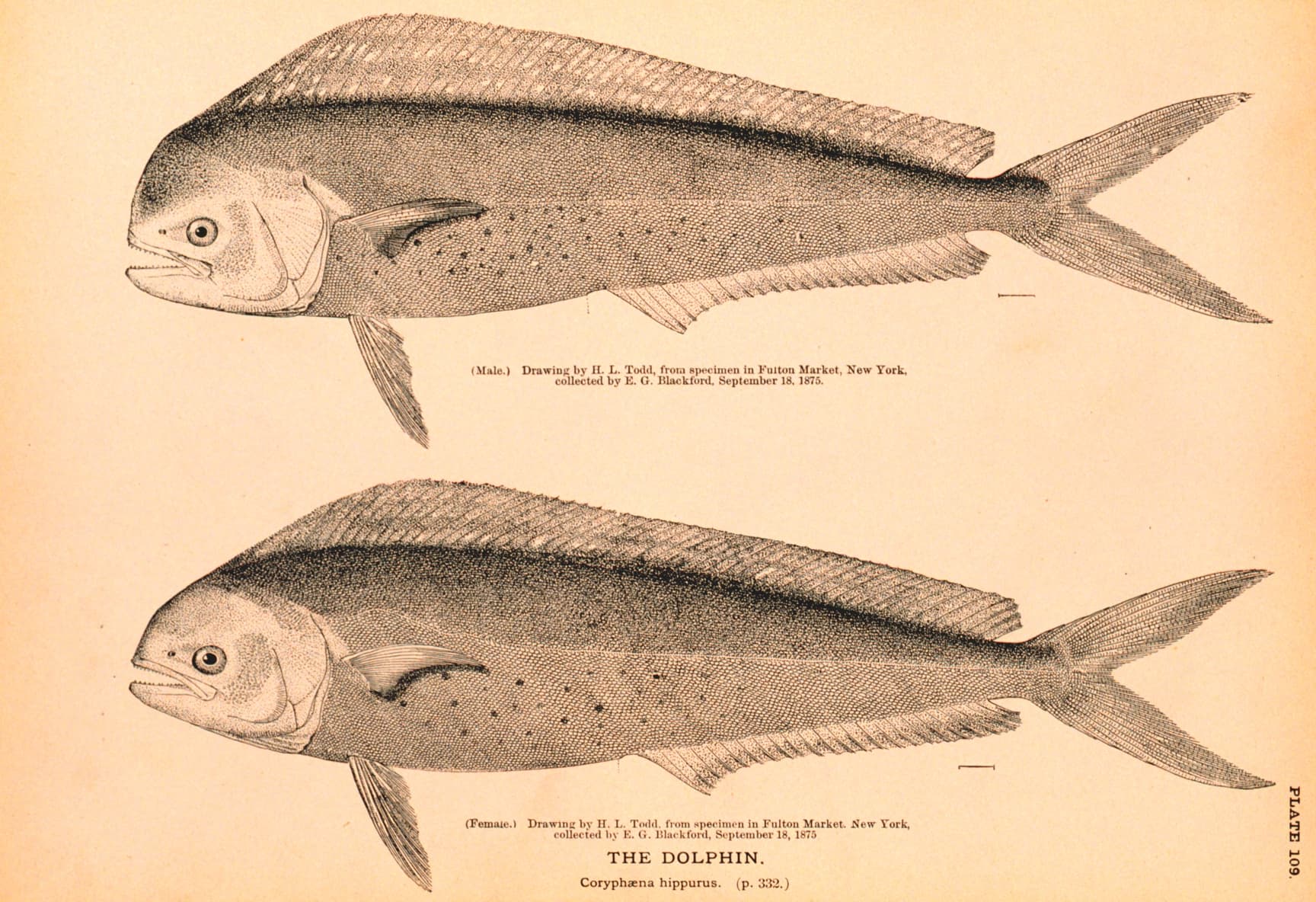
- Electric blue-green back and gold-yellow sides with blue spots; colors fade fast after death.
- A long dorsal fin running from the head to the tail, and a deeply forked tail.
- Bulls (males) have a tall, squared-off forehead; cows (females) a rounded head.
Month by month
- JanSlowFew in Texas waters.
- FebSlowSame.
- MarSlowFirst fish on the deep water in warm years.
- AprFairWeed and fish start showing past the shelf as the blue water warms.
- MayGoodWeedlines form; schools of chickens with bigger fish on the far lines.
- JunPeakPrime: weedlines and debris from 30 miles out.
- JulPeakPrime; bulls on the color changes and around the floaters.
- AugPeakSame; calm seas make the weedline run easy.
- SepGoodGood until the fronts break up the weed.
- OctFairFading as the water cools.
- NovSlowFew.
- DecSlowFew.
Where to find them
Weedlines and debris
Sargassum lines, single mats and anything floating in blue water past about 120 ft. The bigger the object, the more fish; a pallet or a log can hold a school all day. The Offshore map's Sargassum layer shows where the weed is.
Color changes and temperature breaks
The edge where blue water meets green, and temperature breaks in 76–84 °F water. Weed collects on these edges too.
Rigs and floaters
Deepwater floaters and standing rigs in blue water hold mahi around the shade. Ring the rig on the troll.
How to catch them
Run and gun
Troll 5–7 kt along the weedline with rigged ballyhoo, small skirted lures and feathers. When one hooks up, leave it in the water near the boat: the school follows it.
Pitch to the school
With the school up, pitch live or cut pogies and cigar minnows on spinning tackle. Mahi eat almost anything when fired up.
Tackle
20–30 lb spinning for pitching; 30–50 lb trolling outfits with 40–60 lb fluorocarbon leaders. A gaff for the bulls, a net or a lift for chickens.
Reading the conditions
Water
Clean blue water with weed. Low-chlorophyll water near an edge is best; mahi avoid the green, turbid plume water.
Season
June through August is the core; strong fronts and tropical weather break up the weedlines.
Light
Dawn and the first hours of light are best; mahi are daytime fish.
Tips from the water
- Always keep one fish in the water until the school is done.
- Work the shady side and the up-current end of a weedline.
- Big single objects in open water often hold the biggest fish.
- Take what you'll eat: no bag limit doesn't mean no limit.
Common mistakes
- Boating every fish at once and losing the school.
- Trolling straight through a weedline and fouling every lure.
- Ignoring scattered weed: a single mat can hold fish.
Handling and release
Mahi thrash hard in the boat; have the fish box open. Bleed and ice them right away. Release chickens you don't need quickly; they grow fast.
Use it today
- Best mahi-mahi spots right now
- How to find fish offshore
- Conditions and Gulf seas today
- Moon & weather
- Fishing reports
By port: Sabine · Bolivar · Galveston · Freeport · Sargent · Matagorda · Port O'Connor · Rockport · Port Aransas · Corpus Christi · Port Mansfield · South Padre
Sources (3)
Other species
Regulations change: confirm bag and size limits in the TPWD Outdoor Annual and with NOAA Fisheries (federal waters) before you keep a fish. Not for navigation.