King mackerel
Scomberomorus cavalla · Kingfish, kings, smokers (the big ones)
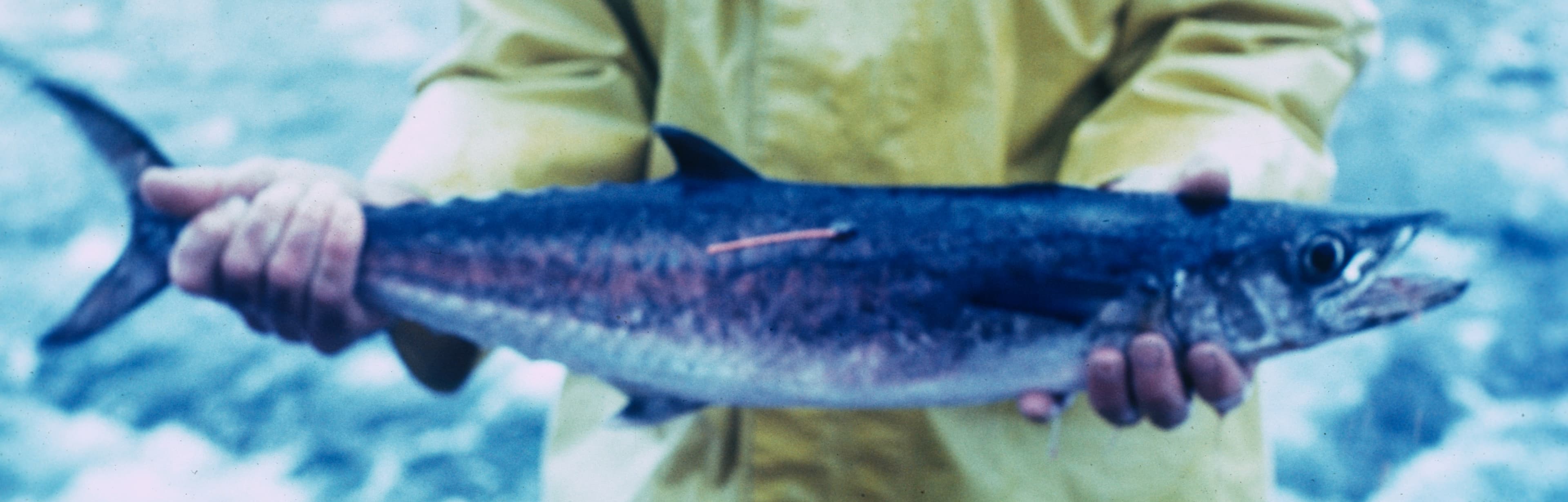
Kings are the most reachable offshore fish in Texas: April through November they're on the nearshore rigs, reefs and wrecks in clean green water, often within sight of the beach on calm days. A slow-trolled live bait on a wire stinger rig catches them, and a big "smoker" will scream off line faster than anything else in the Gulf. Go early, before the afternoon southeast wind builds.
October: GoodFall run; the first strong fronts push them south.
Texas and federal rules · Checked Oct 22, 2026
- Daily bag
- 3 per day
- Size
- 27 in total length (Texas) · 24 in fork length (federal)
- Season
- Open all year
Spanish mackerel: 15 per day, 14 in (Texas). Texas license with saltwater endorsement to land fish from state or federal waters.
Check the current rules ↗At a glance
- Best months
- Apr–Oct; until the first big fronts
- Depth
- 30–250 ft; nearshore rigs, reefs and wrecks
- Water
- Clean green with some current, 71–86 °F
- Bait
- Live blue runners, pogies, croaker or ribbonfish
- Rig
- Two-hook wire stinger rig, light drag
How to identify them
- Long and slim, iron-gray back and silver sides; the lateral line drops sharply below the second dorsal fin (a key difference from Spanish mackerel).
- No yellow-gold spots on adults (Spanish mackerel keep theirs), and no dark patch on the front of the first dorsal fin.
- Wahoo look similar but have a long beak-like snout, tiger bars on the sides and a long, high first dorsal fin.
Month by month
- JanSlowFew in Texas waters.
- FebSlowSame.
- MarSlowFirst fish arrive on the lower coast as the water warms.
- AprGoodKings show on the nearshore rigs and reefs, lower coast first.
- MayPeakPrime: schools on the rigs in clean green water.
- JunPeakPrime, and the tournament season; the smokers come on live bait.
- JulPeakCalm seas put the nearshore rigs within easy reach; go early.
- AugPeakSame; the bite fades in the heat of the day.
- SepGoodGood until the fronts; kings feed hard before the move.
- OctGoodFall run; the first strong fronts push them south.
- NovFairLast fish on the lower coast.
- DecSlowMostly gone.
Where to find them
Nearshore rigs and reefs
The standing platforms and artificial reefs in 30–250 ft hold kings all summer, especially where clean green water and current meet the structure. TPWD's nearshore reefs are king magnets too: Mitchell's and Barr's off Galveston (11–12 nm), and Boatmen's, Lonestar and Port Isabel Reef inside state waters.
Color changes and bait
Pogy schools, birds working and the edge where green water meets blue. Big kings shadow bait schools near the beach on calm days.
Lower coast
Port Mansfield and South Padre see clean water close to shore earliest in the year and often the best king fishing.
How to catch them
Find the school
Slow-troll (4–6 kt) around the rigs with diving plugs (Rapala CD-14/18) or spoons until you get bit, then stay.
Slow-troll live bait
Bridle a live blue runner, pogy or croaker on a stinger rig and bump-troll just in and out of gear, or drift with the bait out behind the boat. Chum with cut pogies to hold the school.
Rig and tackle
A two-hook stinger rig of 40–60 lb #4–#6 wire with the trailing treble about 7 in back (kings slash at the tail), 20–30 lb tackle and a light drag for the first run. Frozen cigar minnows or ribbonfish on the same rig work when live bait is short.
Reading the conditions
Water
Clean green water with some current. Muddy water after a blow pushes them offshore.
Time of day
Early. The afternoon southeast wind builds the sea and the bite usually fades by midday in summer.
Temperature
Kings arrive as the water warms past about 70 °F and leave with the fall fronts.
Tips from the water
- Light drag, sharp hooks, wire leader.
- A stinger hook in the back of the bait catches the fish that cut it in half.
- Chum with cut pogies once you find them.
- Don't gaff the small ones you plan to release; lift them in by the leader.
Common mistakes
- Mono leaders: kings cut through them.
- A tight drag on the first run.
- Confusing a small king with a Spanish mackerel (and its 14 in limit).
Handling and release
Kings have razor teeth: use pliers and keep hands clear. Bleed and ice keepers right away; mackerel spoil quickly. Large kings carry more mercury; eat the smaller ones.
Use it today
- Best king mackerel spots right now
- How to find fish offshore
- Conditions and Gulf seas today
- Moon & weather
- Fishing reports
By port: Sabine · Bolivar · Galveston · Freeport · Sargent · Matagorda · Port O'Connor · Rockport · Port Aransas · Corpus Christi · Port Mansfield · South Padre
Sources (3)
Other species
Regulations change: confirm bag and size limits in the TPWD Outdoor Annual and with NOAA Fisheries (federal waters) before you keep a fish. Not for navigation.